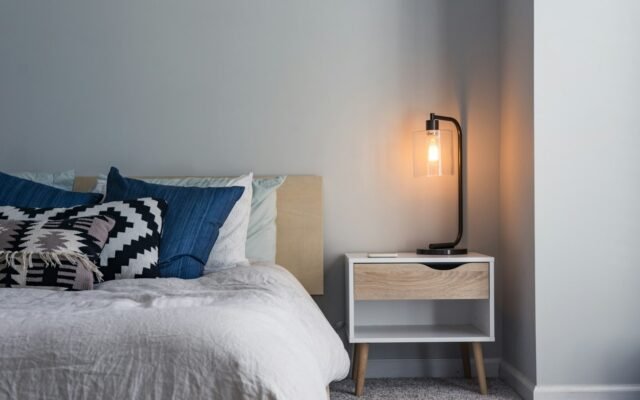
Ever bought a new bulb, screwed it in, and suddenly your living room looked like a dentist’s office? You’re not alone. The number on the box that caused it is the color temperature, and once you understand it, you’ll never pick the wrong bulb again.
What the “K” number means
Color temperature is measured in Kelvin (K). Lower numbers are warmer and more yellow-orange. Higher numbers are cooler and more blue-white.
| Kelvin | Usually labeled | How it feels |
|---|---|---|
| 2200–2700K | Extra warm / Soft white | Candlelight, cozy, relaxing |
| 3000K | Warm white | Warm but a little crisper |
| 3500–4000K | Neutral / Cool white | Clean, bright, focused |
| 5000–6500K | Daylight | Very bright and blue, like an office |
One thing that confuses people: “cool white” doesn’t mean dim and “warm white” doesn’t mean bright. Brightness is a separate number, measured in lumens. You can have a very bright warm bulb or a dim cool one.
Room-by-room cheat sheet
- Bedroom: 2700K or lower. You want your body to wind down here.
- Living room: 2700–3000K. Warm and welcoming, still good enough for reading.
- Dining area: 2700K. Warm light makes food (and people) look better.
- Kitchen: 3000–4000K over counters where you chop and cook; warmer for the rest of the room if it’s open-plan.
- Bathroom: 3000–3500K around the mirror. Too warm makes makeup tricky, too cool is unflattering.
- Home office / desk: 3500–4000K for focus during the day.
- Garage, workshop, closet: 4000–5000K. Seeing clearly matters more than mood.
The mistake almost everyone makes
Mixing temperatures in the same room. A 2700K lamp next to a 5000K ceiling light makes both look wrong: one too orange, one too blue. Pick one temperature per room (or per open-plan zone) and stick to it.
Don’t forget CRI
If you see “CRI” on the box, that’s the Color Rendering Index, which tells you how natural colors look under the bulb. A CRI of 90 or above makes skin, wood, and fabric look true to life. For living spaces it’s worth the small extra cost.
Can’t decide? Get tunable bulbs
Tunable white smart bulbs let you change the color temperature from an app or remote: cooler during the day, warmer at night. They’re a great option for rooms that do double duty, like a bedroom that’s also your workspace.
👍 Pros
- Warm bulbs make rooms feel cozy and inviting
- Cool bulbs help with detailed tasks
- Tunable bulbs give you both
👎 Cons
- Mixing temperatures looks messy
- Very cool light at night can feel harsh
Quick takeaway
If you remember just one thing: 2700K for living and sleeping, 4000K for working. Grab a pack of warm 2700K LED bulbs for your bedroom and living room, and you’ve already fixed the biggest lighting mistake in most homes.
Photo: Johannes Plenio on Unsplash.