A lot of home offices have one big problem: they were never meant to be offices. The spare room or kitchen corner has a single ceiling light, and by mid-afternoon you’re squinting at your screen and your notes. A good desk lamp fixes most of that.
Here’s what actually matters when you choose one.
What to look for in a desk lamp
- Adjustable arm and head. You need to aim light onto your desk, not into your eyes or onto your screen.
- Brightness around 450–1000 lumens, ideally dimmable. Paperwork needs more light than a screen-only setup.
- Adjustable color temperature. Around 4000K helps focus during the day; warmer settings are easier in the evening.
- High CRI (90+). Colors and text look natural, which matters for design work and reading.
- Flicker-free LEDs. Some cheap LEDs flicker at a level you don’t consciously notice but that can be tiring.
- Stable base or clamp. Clamp lamps free up desk space.
Where to put your desk lamp
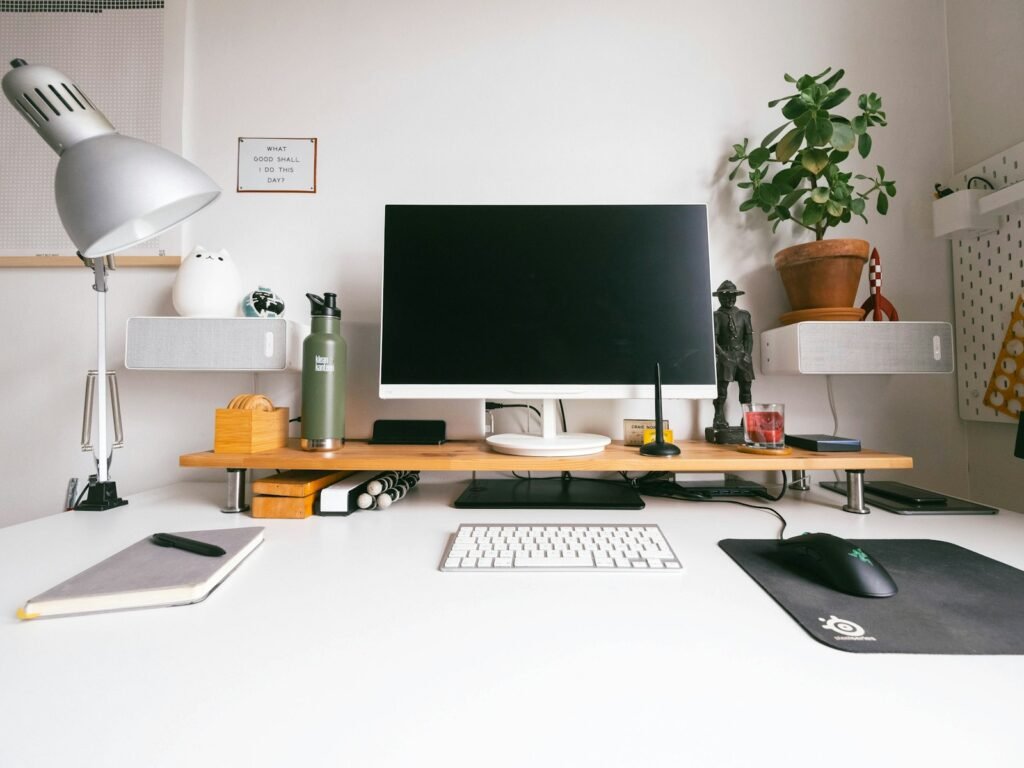
Place the lamp on the side opposite your writing hand so your hand doesn’t cast a shadow. Aim it so the light falls on the desk surface in front of you, slightly to the side of your screen. Light that hits the screen directly creates glare and washes it out.
Also avoid sitting with a bright window directly behind your screen, or directly behind you. Side light from a window is the most comfortable.
Don’t forget the background
Working in a dark room with only a bright screen and one desk lamp can be tiring because your eyes keep adjusting between bright and dark. Keep some soft ambient light in the room too: a floor lamp, a ceiling light on low, or a monitor light bar that lights the desk without reflecting on the screen.
Types of desk lamp
| Type | Good for |
|---|---|
| Architect / swing-arm lamp | Maximum flexibility, paperwork, drawing |
| Clamp-on LED lamp | Small desks, saving space |
| Monitor light bar | Screen-heavy work, minimal desks |
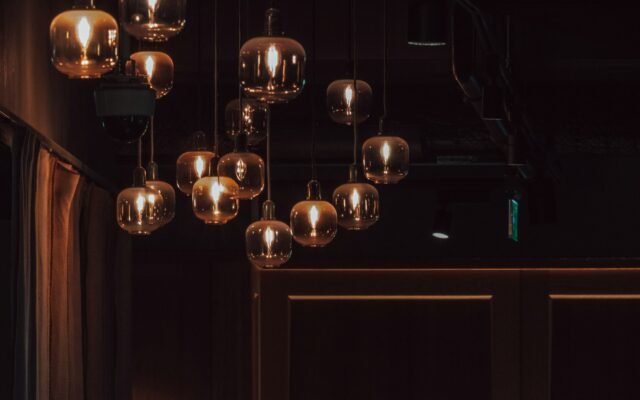
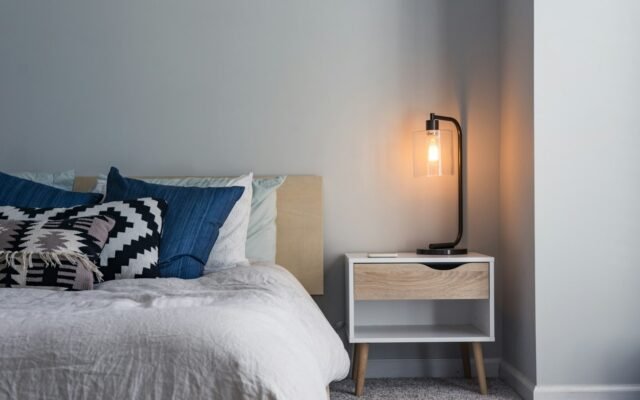
| Decorative table lamp | Ambient light; not ideal as your only task light |
For most home offices, an LED desk lamp with adjustable brightness and color temperature is the most flexible single purchase.
👍 Pros
- Less eye strain during long days
- Adjustable color helps day and evening work
- Clamp lamps save desk space
👎 Cons
- Badly aimed lamps cause screen glare
- Cheap LEDs can flicker
Quick checklist
- Adjustable arm, dimmable, color-adjustable
- Placed opposite your writing hand
- Light on the desk, not the screen
- Some soft background light in the room
Get those right and your lamp will quietly make every workday a little easier.
Desk lamp setup for video calls
Your desk lamp can make you look better on camera too. The common mistake is having the main light behind you, which turns you into a silhouette. Instead, put soft light in front of you, slightly to one side and a little above eye level. A lamp bounced off a light wall, or a lamp with a fabric shade, gives a softer look than a bare LED pointed at your face. Keep the color temperature consistent with any daylight in the room so your skin tone looks natural.
Reducing eye strain at your desk
- Balance screen and room brightness. A very bright screen in a dark room is tiring. Light the room and lower the screen brightness slightly.
- Avoid reflections. If you can see the lamp reflected in your monitor, move or angle it.
- Take short breaks. A common tip is to look at something far away for a few seconds every 20 minutes or so.
- Use warmer settings later in the day. If your lamp is adjustable, shift towards warmer light in the evening.
If you still have frequent headaches or eye discomfort, it’s worth getting your eyes checked.
Frequently asked questions
What color temperature is best for a desk lamp?
Around 4000K is good for focused daytime work. In the evening, a warmer setting around 3000K is more comfortable. Adjustable lamps let you change it.
How bright should a desk lamp be?
Around 450 to 1000 lumens covers most needs. Paperwork and detailed tasks need more light than screen-only work. Dimmable lamps are the most flexible.
Which side should a desk lamp be on?
Put it on the side opposite your writing hand so your hand does not cast a shadow over your work.
Is a monitor light bar better than a desk lamp?
A monitor light bar is great for screen-heavy work and small desks because it lights the desk without reflecting on the screen. A desk lamp is more flexible for paperwork and drawing.
Do LED desk lamps flicker?
Some cheaper LED lamps can flicker at levels you may not consciously notice. Look for lamps described as flicker-free.
Keep reading: Warm White vs Cool White: Which Bulb Color Should You Use in Each Room? · Smart Bulbs for Beginners: Everything You Need to Know Before You Buy
For background reading, see task lighting on Wikipedia.
Photo: Arthur Lambillotte on Unsplash.