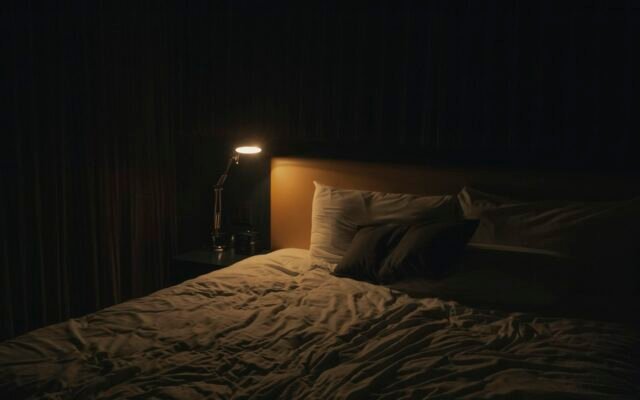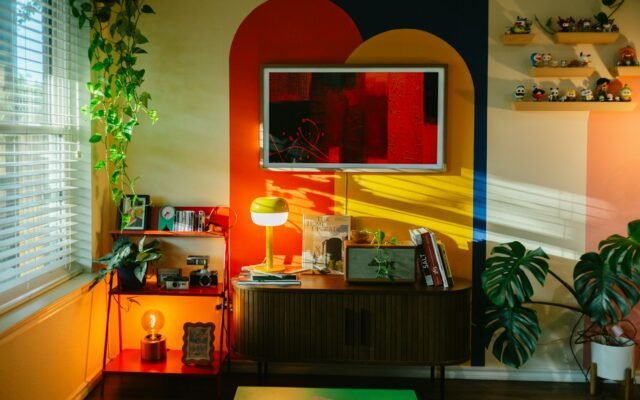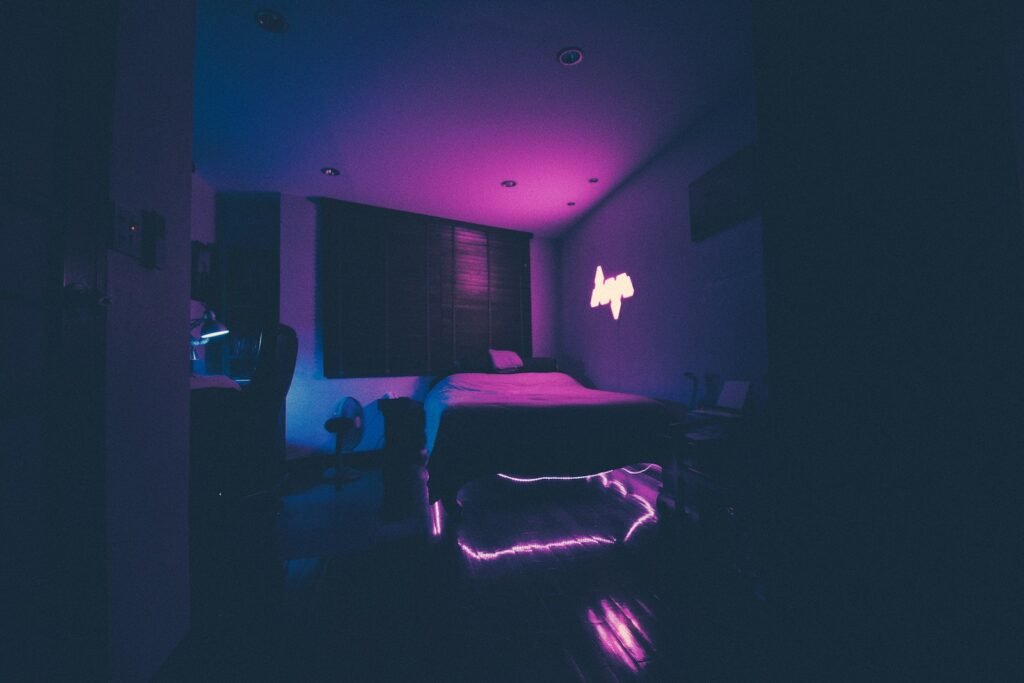
LED strip lights have a bit of a reputation. Mention them and most people picture a teenager’s room glowing purple and blue. But used the right way, the same strips can make a bedroom look like a boutique hotel.
The difference isn’t the product. It’s where you put it and what color you choose.
The golden rule: hide the strip, show the glow
LED strip lights look best when you can’t see the strip itself, only the soft light it throws onto a wall, ceiling or floor. A visible row of little dots looks cheap. A smooth wash of light looks expensive.
The second rule is color. For a calm, grown-up bedroom, set your strips to warm white most of the time. Save the colors for parties.
8 bedroom ideas with LED strip lights
- Behind the headboard. Stick a strip on the back of the headboard so light spills up the wall. This is the single most effective idea.
- Under the bed frame. A strip along the underside of the bed creates a “floating” effect and doubles as a gentle night light.
- Behind the TV. Backlighting reduces the harsh contrast of a bright screen in a dark room, which many people find easier on the eyes.
- Along a ceiling cove or top of wardrobes. Light bouncing off the ceiling gives a soft ambient glow without any lamp.
- Inside shelves. Run strips along the top inside edge of open shelves to light up books and plants.
- Behind a mirror. A full-length mirror with a backlit glow looks modern and helps when getting ready.
- Inside the wardrobe. Motion-sensor strips that switch on when you open the door are genuinely useful.
- Along the bottom of a desk or vanity. A subtle glow that makes a workspace feel more finished.
How to choose LED strip lights
| Feature | What to look for |
|---|---|
| Color options | A “tunable white” or RGBW strip has a proper warm white channel. Basic RGB strips make an imitation white that often looks bluish. |
| LED density | More LEDs per meter means a smoother line of light with fewer visible dots. |
| Control | Remote, app, or smart-home support. Dimming is essential for bedrooms. |
| Length | Measure first. Most strips can be cut at marked points, but can’t be extended easily. |
| Power | Check the plug-in adapter can reach an outlet without trailing cables across the room. |
If you want the warm, hotel-style look, search for RGBW strips with a dedicated warm white rather than basic RGB.
Installation tips that save headaches
- Clean the surface with a little rubbing alcohol before sticking. Dust is the main reason strips fall off.
- Use mounting clips on rough surfaces or ceilings instead of relying on the adhesive alone.
- Try an aluminium channel with a diffuser if the strip will be visible. It hides the dots and helps the LEDs stay cool.
- Renting? Stick strips to furniture (back of the headboard, underside of the bed) instead of walls.
👍 Pros
- Hidden light sources look high-end
- Very low energy use
- Dimmable and often smart-home friendly
👎 Cons
- Visible dots look cheap
- Adhesive can fail on dusty surfaces
- Basic RGB 'white' often looks blue
The bottom line
Start with one strip behind the headboard, set to warm white and dimmed to around half. If you like the effect, add a second under the bed. Two well-placed LED strip lights will do more for a bedroom than ten colorful ones.
LED strip light colors that work in a bedroom
Most bedroom LED strips can show millions of colors, but only a few actually make a room feel good to sleep in:
- Warm white (2200–2700K): the everyday choice. Calm, flattering and hotel-like.
- Soft amber or orange: very relaxing at low brightness, great as a night light.
- Dim pink or peach: cozy and playful if you like a little color.
- Bright blue or cool white: best avoided in the evening; they feel energizing rather than relaxing.
Are LED strips safe in a bedroom?
LED strips run at low voltage and stay fairly cool, which makes them a safe choice when installed properly. Buy strips with a proper power adapter from an established brand, don’t run more length than the adapter is rated for, keep the adapter in an open spot rather than buried under bedding, and avoid sticking strips inside enclosed spaces where heat can build up. If you use an aluminium channel, it also helps the LEDs stay cool and last longer.
Frequently asked questions
Where should LED strip lights go in a bedroom?
The most effective spots are behind the headboard, under the bed frame, behind the TV, along the top of wardrobes or a ceiling cove, and inside shelves. Hide the strip so you see the glow, not the LEDs.
Do LED strip lights damage walls?
The adhesive can pull paint off when removed. Renters can stick strips to furniture instead, or use mounting clips and removable solutions.
Can LED strips be cut?
Most LED strips can be cut at marked points along the strip. Check the product instructions, and remember that extending a strip later is harder than cutting it.
Do LED strip lights use a lot of electricity?
No. LED strips are very energy-efficient, and at the low brightness most people use in a bedroom, their running cost is small.
What is the difference between RGB and RGBW strips?
RGB strips mix red, green and blue LEDs to create colors, and their "white" often looks bluish. RGBW strips add a dedicated white LED, which gives a much cleaner and warmer white light.
Keep reading: 11 Fairy Light Ideas for Your Bedroom (Without Damaging the Walls) · Smart Bulbs for Beginners: Everything You Need to Know Before You Buy
Want the technical background? Wikipedia’s page on LED strips is a good primer.
Photo: Joshua Rawson-Harris on Unsplash.