You’ve got a dark corner, a sofa that needs more light, or a bedroom that feels flat. The question comes up almost every time: floor lamp vs table lamp, which one should you buy?
The honest answer is that they solve different problems. Once you know which problem you have, the choice is easy.
The quick difference
| Floor lamp | Table lamp | |
|---|---|---|
| Light height | High, often above head height | Low to mid, around seated eye level |
| Best at | General room light, reading chairs, dark corners | Cozy pools of light, bedsides, side tables |
| Needs | Floor space and a nearby outlet | A table, nightstand or console |
| Visual impact | Big, can be a statement piece | Smaller, adds warmth and detail |
When a floor lamp is the better choice
- Your room has no ceiling light, or the one you have is harsh. An uplighter floor lamp bounces light off the ceiling for soft, even ambient light.
- You need reading light by a chair or sofa with no side table. An arc or adjustable floor lamp reaches over you.
- A corner feels dark and dead. A tall lamp in the corner makes the whole room feel bigger.
- Surfaces are limited. Small apartments often have more floor space than table space.
When a table lamp is the better choice
- You want coziness more than brightness. Table lamps create warm pools of light at eye level when you’re sitting, which is what makes a room feel intimate.
- Bedside lighting. Almost always a table lamp (or a wall sconce).
- Styling a console, sideboard or desk. A table lamp adds height and warmth to a surface.
- Pets or small kids. A heavy table lamp on a stable surface is harder to knock over than a tall floor lamp.
Floor lamp vs table lamp: why most rooms need both
In the floor lamp vs table lamp debate, the real winner is usually “one of each”. Good rooms have light at different heights: a floor lamp gives height and general light, and a table lamp gives low, cozy light. Together they replace the harsh overhead light completely.
A good starting combination for a living room is one arc floor lamp beside the sofa and one table lamp with a linen shade on the opposite side of the room.
Sizing tips
- Floor lamps: for reading, the bottom of the shade should be roughly at shoulder height when you’re seated, about 100–125cm (40–49 inches) from the floor.
- Table lamps: lamp height plus table height should land around 140–160cm (55–63 inches) in living rooms so the shade hides the bulb when you’re seated.
- Shades: fabric shades spread light softly; metal shades focus it downward.
👍 Pros
- Floor lamps light whole rooms and dark corners
- Table lamps add cozy, eye-level warmth
- Using both creates layered light
👎 Cons
- Floor lamps take floor space and can tip
- Table lamps need a surface near an outlet
The quick decision
Need more light overall? Get a floor lamp. Need the room to feel warmer and more inviting? Get a table lamp. Want it to look professionally lit? Get one of each and keep them both on warm 2700K bulbs.
Types of floor lamps
- Uplighter (torchiere): points light at the ceiling for soft general light.
- Arc lamp: curves over a sofa or chair, great for reading without a side table.
- Tripod lamp: a stylish statement with a big fabric shade for ambient light.
- Adjustable reading lamp: a slim pole with a movable head for focused task light.
- Mother-and-child lamp: an uplighter plus a small reading arm in one.
Types of table lamps
- Classic lamp with fabric shade: warm, cozy, works almost anywhere.
- Mushroom or dome lamp: a soft, low glow, great for consoles and shelves.
- Buffet lamp: tall and slim, ideal for sideboards.
- Cordless rechargeable lamp: moves from dining table to balcony with no cable.
- Desk or task lamp: adjustable and focused for working.
Safety and stability
Tall floor lamps can tip if bumped, so choose one with a heavy base in homes with kids or pets, and keep cables tucked along walls rather than across walkways. Table lamps should sit on stable surfaces with the cord out of reach of small hands.
Frequently asked questions
Is a floor lamp or table lamp better for reading?
Both can work. An arc or adjustable floor lamp is great beside a chair without a table, while a table lamp works well when there is a side table at the right height.
Can a floor lamp replace a ceiling light?
An uplighter floor lamp can provide enough ambient light for many rooms, especially when combined with a table lamp or two.
How tall should a floor lamp be?
For reading, the bottom of the shade should be around shoulder height when you are seated, typically 100 to 125 cm (40 to 49 inches) from the floor.
How many lamps should a living room have?
Most living rooms look best with at least two or three light sources at different heights, such as one floor lamp and one or two table lamps.
Which is better for a small apartment?
If surfaces are limited, a slim floor lamp is often the better choice. If floor space is limited, a table lamp or plug-in wall lamp may suit you more.
Keep reading: Layered Lighting for Your Living Room: A Simple 3-Layer Plan · How to Choose the Right Bedside Table Lamp (Height, Shade and Bulb)
Interested in how designers think about this? See lighting design on Wikipedia.
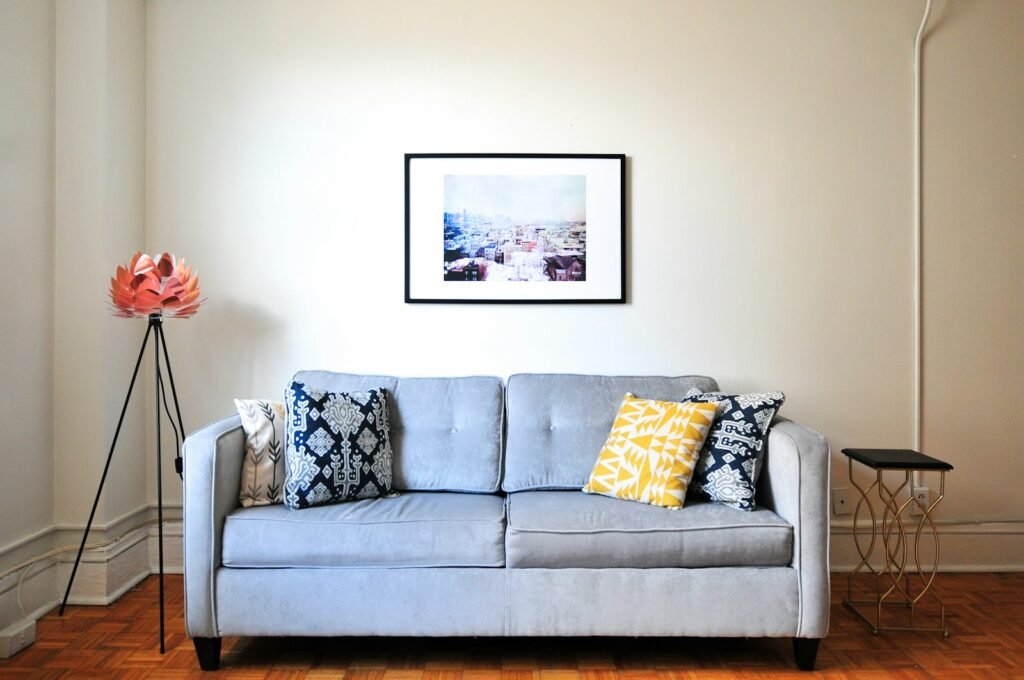
Photo: Naomi Hébert on Unsplash.